Last updated: November 13, 2026
Quick answer: a good citation check routine for AI-assisted writing gives you one last pass to verify every citation, hyperlink, quote, and reference list entry before publication.
That routine catches bad links, wrong page numbers, broken quote attribution, and references that look polished but point nowhere.
In this article, How to Create a Citation Check Routine for AI-Assisted Writing means building that check around the work you already do.
Key Takeaways
- The final citation pass checks whether each claim matches the source it names.
- Verify AI writing one citation at a time against the original source.
- Use the original source first, because drafts can omit, compress, or guess.
- A citation check covers format, quotes, links, attribution, and the reference list.
What a citation check routine does in AI-assisted writing
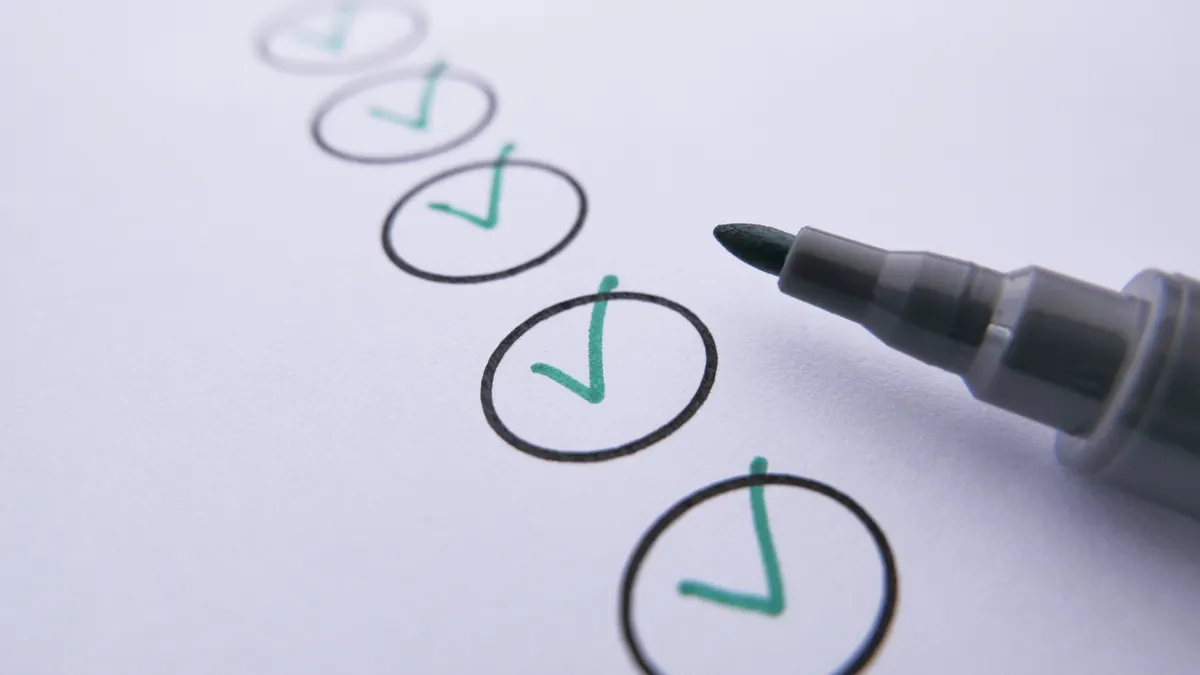
A citation check routine is the last pass that makes sure each claim points to the right source and each source supports the exact claim in the text. It is not a vague “looks fine” scan; it is a line-by-line check of citations, hyperlinks, quotes, the reference list, and the original source.
For How to Create a Citation Check Routine for AI-Assisted Writing, the point is simple: clean prose alone is not enough. Picture this: you’re staring at a draft with clean prose, neat footnotes, and a polished reference list, but one quoted sentence came from the wrong page and one link goes to a homepage instead of the source. The draft looks done. It is not.
The routine exists to catch that mismatch before anyone reads it.
A useful routine has three jobs:
- Match each in-text citation to the source named in the reference list.
- Confirm each quoted passage is exact and attributed to the right speaker or author.
- Check that each link opens the source you meant, not a dead page or a different article.
This does not require fancy software. A browser, the draft, and a simple checklist do most of the work. If you want the bigger picture around content review, the hub on AI content quality and verification is the right place to pair with this process.
How do you verify citations in AI writing?
You verify citations in AI writing by checking every claim against the source it names, one citation at a time. That means reading the original source, not trusting the AI summary or the draft’s neat formatting.
Because the routine is built around the source, it needs careful reading. Picture this: you’re reviewing a paragraph with three citations and one of them looks perfect at a glance. The citation can still be wrong in five ways — wrong author, wrong year, wrong page, wrong source, or a source that does not support the claim at all.
That is why this step comes first.
- Open the draft, the source PDF or article, and the reference list side by side in a browser window.
- Match each in-text citation to one entry in the reference list before you read the source text.
- Read the original source for the exact claim, not just the title or abstract.
- Compare the wording, page number, date, and author name against the draft.
- Mark anything that is unsupported, vague, or stronger than the source actually says.
If the source says “may,” the draft should not say “does.” If the source names a narrow finding, the draft should not stretch it into a broad one. That gap is where AI-assisted drafts often slip.
A plain checklist helps here:
- Citation points to the correct source.
- Source supports the exact claim.
- Page number or section is right.
- Author, date, and title are spelled correctly.
- The claim does not exceed the source’s scope.
This pass is fast when the draft is clean and slow when the draft is sloppy. Slow is better than wrong.
Build the routine around the original source, not the draft
You build the routine around the original source because the draft can lie by omission, compression, or confident guesswork. The original source is the place where support, context, and limits live together.
Picture this: you’re checking a sentence that sounds reasonable, but the AI has trimmed the qualifier that changes everything. The source may support the idea only in a narrow setting, such as one survey, one region, or one year. The draft may have erased that limit.
That is not a small edit. It changes the meaning.
Here is the order that works well:
- Open the original source before you touch the draft edits.
- Locate the exact sentence, table, or section that supports the claim.
- Confirm whether the claim is direct, inferred, or too broad.
- Copy the key details into your notes only if they still match the source.
- Revise the draft so the claim stays inside the source’s bounds.
Use the source first, then the draft. That order keeps you from “fixing” the writing into something false.
Two common traps live here:
- A citation names the right paper, but the paper only supports part of the sentence.
- A quote is real, but the surrounding context flips its meaning.
Both cost credibility. Both are easy to miss if you start by reading the draft alone.
What should a citation check include?
A citation check should include format review, quote matching, link validation, attribution rules, and reference cleanup. That is the full job, not just a quick scan for broken links.
Because this is How to Create a Citation Check Routine for AI-Assisted Writing, the checklist has to work at the sentence level. Picture this: you’re near the end of a draft and the references look tidy, but one journal title is wrong and two hyperlinks point to the publisher homepage instead of the article page. The content may still be useful, but the citation package is weak.
A strong routine catches that too.
Use these five parts every time:
- Citation format review: Check author order, year, title style, punctuation, and page numbers against the style you are using.
- Quote-to-source matching: Make sure every quotation mark wraps words that appear exactly in the source.
- Link validation: Open each hyperlink in a browser and confirm it reaches the exact source, not a search result or a landing page.
- Attribution rules: Make sure quoted or paraphrased material names the right author, organization, or speaker.
- Reference cleanup: Remove duplicates, fix spelling, and make sure every in-text citation appears in the reference list.
If you work with a style guide like APA, MLA, or Chicago, use that style’s rules at the end, not the beginning. First verify the source. Then polish the format. A perfect-looking citation that points to the wrong thing is still wrong.
A fast check can still be careful:
- Open every link.
- Read every quote in the source.
- Compare every entry in the reference list.
- Remove any source that is named in the draft but not used in the argument.
- Add any source that is used in the text but missing from the list.
Missing sources make the draft look unfinished and can hide where the AI filled in a gap. According to the APA Style reference guidance, a reference list should include only works cited in the text, which helps keep the record complete and usable. https://apastyle.apa.org/style-grammar-guidelines/references
How do you check links in a draft?
You check links in a draft by opening each hyperlink and confirming that it lands on the exact source the text cites. A visible link is not enough. The destination has to match the claim and the citation label.
For How to Create a Citation Check Routine for AI-Assisted Writing, a working URL is only the start. Picture this: you’re reviewing a paragraph with three links, and all three open successfully. That still does not mean they are right. One may lead to a homepage, one to the wrong version of a document, and one to a page that changed title after publication.
Working links can still be wrong links.
Use this simple order:
- Open the link in a fresh browser tab.
- Confirm the page title, author, and date.
- Check whether the page is the article, report, or record the draft cites.
- Reload the page once to catch broken redirects or session errors.
- Replace any link that goes to a general landing page when a stable source page exists.
A link check also needs a judgment call. A live page that changed its content may no longer support the sentence you wrote. That is common with news pages, blog posts, and government pages that get updated without warning. If the page changed, update the citation or rewrite the claim.
Keep these link problems on your radar:
- Redirects to search pages.
- Links to paywalled abstracts when the draft needs the full text.
- Links to archived or cached copies when the live source is still available.
- Links that resolve, but to a different document than the one named in the citation.
That is why a link pass belongs in the routine itself, not after publication. Broken or mismatched links make good writing look careless. The U.S. Government Publishing Office recommends using stable, accessible source records when possible, which is one reason live-link checks matter. https://www.govinfo.gov/
Why quote-to-source matching prevents the worst errors
Quote-to-source matching prevents the worst errors because quoted text is the easiest thing for a reader to verify and the easiest thing for an AI draft to get almost right. “Almost right” is not right.
When you build How to Create a Citation Check Routine for AI-Assisted Writing, quoted lines need special care. Picture this: you’re scanning a quote and it seems faithful until you compare it line by line with the source. One word is changed, one bracketed edit is missing, or the quote starts in the middle of a sentence that changes the meaning.
That kind of error is hard to defend.
A clean quote check takes three moves:
- Check exact wording against the original source, including spelling and punctuation where your style guide requires it.
- Check the cut to make sure the excerpt did not remove the part that limits or changes the claim.
- Check the speaker so the quote is attached to the right person or organization.
If you shorten a quote, make sure the omission does not remove the key context. If you paraphrase instead of quoting, the paraphrase still has to reflect the source honestly. Quotes are evidence, not decoration.
There is a simple test for this section of the routine:
- Can a reader trace every quoted phrase back to the source in under a minute?
- Does the quote still mean the same thing out of context?
- Would the source author object to the way the quote is framed?
If the answer is no to any of those, the citation needs work.
How to keep your reference list clean
You keep your reference list clean by treating it as a final inventory, not a storage bin for every source the AI happened to mention. The list should contain only sources actually used in the draft, and every entry should match the in-text citation.
To keep How to Create a Citation Check Routine for AI-Assisted Writing usable, this cleanup step has to stay strict. Picture this: you’re near the end of a long draft, and the reference list has duplicate entries, missing initials, and one source that never appears in the body. That kind of mess slows readers down and makes the draft look unvetted.
It also hides missing support.
Use this cleanup pass:
- Sort the reference list by the style guide you use.
- Scan for duplicates with slightly different spelling or formatting.
- Match each entry to an in-text citation.
- Remove sources that are not cited anywhere in the draft.
- Fix author names, titles, dates, and publication details so they match the original source.
A clean list does two jobs at once. It shows where the draft got its facts, and it gives the reader a path back to those facts. If a reader cannot find the source, the citation fails the job even if the text is accurate.
Two details trip up a lot of drafts:
- The in-text citation says one year, and the reference list says another.
- The author’s name is spelled one way in the text and another way in the list.
These errors are small in appearance and not harmless. They tell the reader that the source line was not checked with care.
A 10-minute citation check routine you can repeat
A repeatable citation check routine takes about 10 minutes on a short draft if the sources are already organized. The routine is the same every time: verify, match, open, compare, clean.
For How to Create a Citation Check Routine for AI-Assisted Writing, that fixed order matters because it keeps the work moving. Picture this: you’re finishing a post and you need a final pass that does not swallow the whole afternoon. You do not need a complex workflow. You need a fixed order and a stop point.
That is what makes it repeatable.
Use this order each time:
- Scan the draft for every citation, quote, link, and reference entry.
- Open the original source for each item.
- Compare the claim, quote, or link target against the source.
- Fix any mismatch in the draft or the reference list.
- Recheck the edited lines once before publication.
The key is to keep the routine small enough that you will actually use it. If the check turns into a research session, it will get skipped. If it is too shallow, it will miss the errors that matter. A tight routine sits in the middle.
Here is a practical rule: if you cannot explain why a citation supports a sentence in one clear line, the citation probably does not support it well enough. That is the line worth revising.
Common mistakes that break citation checks
The most common mistake is trusting the AI draft more than the source, and that mistake costs accuracy, time, and trust. AI can draft a clean citation line that looks real and still be wrong in the details.
When you use How to Create a Citation Check Routine for AI-Assisted Writing, small doubts deserve attention. Picture this: you’re reviewing a polished paragraph and the only clue that something is off is a source title that sounds a little too generic. That is enough reason to slow down. A citation routine works best when you treat small doubts as signals, not as noise.
Ignore them and the errors stack up.
Watch for these errors:
- Paraphrase drift: The draft turns a narrow source into a broad claim.
- Quote drift: The quote changes by a word or two, then no longer means the same thing.
- Link drift: The URL opens, but not to the source the sentence names.
- Reference drift: The list entry no longer matches the in-text citation.
- Source drift: The draft cites a source that does not actually appear in the source set you used.
The fix is blunt but effective: go back to the original source, then rewrite the sentence to match what it really supports. Do not patch a bad citation with style alone. Style cannot save a wrong source.
If you want this routine to stick, keep the checklist next to the draft template and run it the same way every time. Repetition is what turns a good habit into a reliable one.
FAQ
How do you verify citations in AI writing?
You verify citations in AI writing by checking each citation against the original source, not the draft summary. Read the source, match the claim, and confirm the author, date, page, or section if your style uses them. If the source does not support the exact wording, revise the sentence.
What should a citation check include?
A citation check should include citation format review, quote matching, link validation, attribution rules, and reference cleanup.
Drafted with AI; not yet reviewed by a person.