Last updated: November 12, 2026
Key Takeaways
- A source supports AI-assisted writing when it fits the exact claim and does not leave the model guessing.
- Credibility is clear when you can state, in one sentence, why this source fits the claim.
- A source is strong only when its type matches the job you need it to do.
- Date and method show whether the source is current enough and whether its claims deserve trust.
If you’re using AI-assisted writing, How to Evaluate Whether a Source Is Strong Enough for AI-Assisted Writing starts with whether the source’s origin, date, method, and bias checks hold up under quick inspection.
In short: the source has to be traceable, current, and fit for the claim you want to make.
This guide settles the checks that separate a useful journal article, industry report, primary source, news source, or expert interview from something that will weaken your draft.
In short: what makes a source strong enough?
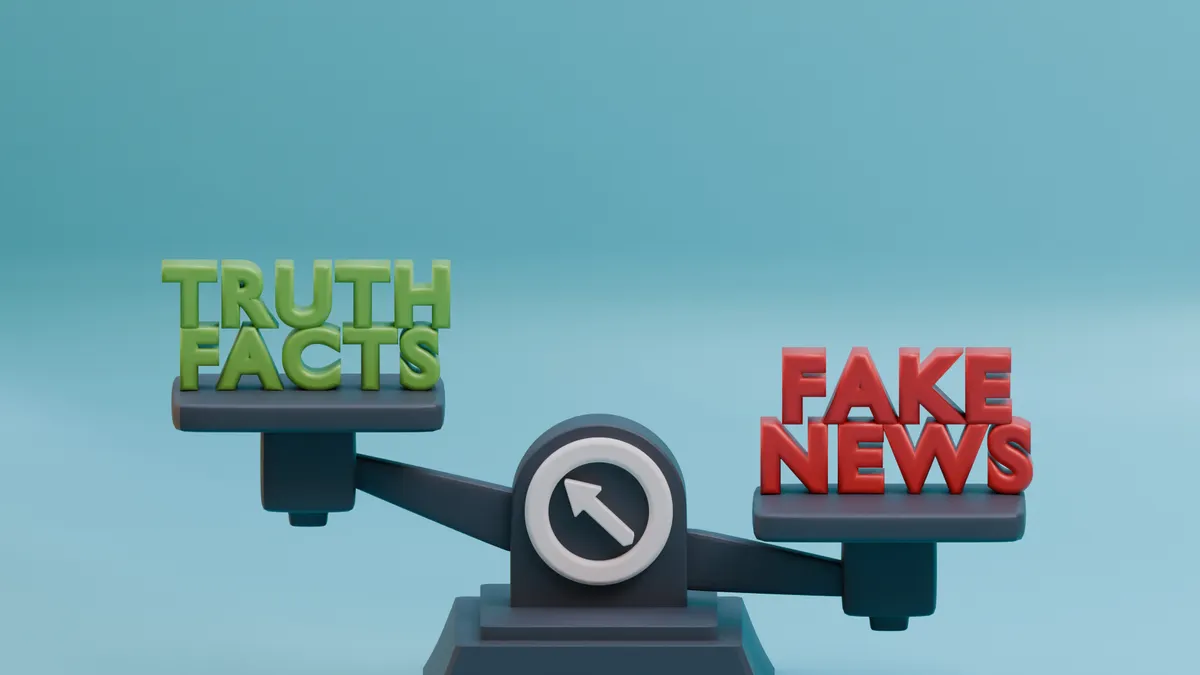
A source is strong enough for AI-assisted writing when it can support the exact claim you need without forcing the AI to guess. That means the source has a known author or institution, a clear publication date, enough context to judge how the information was gathered, and no obvious sign that it is trying to sell you a conclusion.
For example, you may have three tabs open and AI is waiting for input. One is a journal article with methods, one is a news story with no named reporter, and one is a blog post from 2019 with no references. The strongest choice depends on your claim, not on which page looks polished. Source quality criteria are about fit, not sheen.
Here’s the catch: a source can be “credible” in a general sense and still be wrong for your draft. A 2024 industry report may be perfect for market share language, but weak for a technical statement if it gives no method. A primary source may be excellent for dates and quotes, but poor for broader interpretation.
Use this first-pass rule:
- Traceable: can you tell who made it?
- Current enough: does the date fit the claim?
- Method-backed: does it explain how the information was gathered?
- Low bias risk: does it have a reason to bend the story?
- Useful for your claim: does it answer the question you’re actually writing?
Not every source has to score high on every line. A firsthand government filing and a careful expert interview play different roles. However, the mistake is treating them as interchangeable.
How do you know if a source is credible for writing?
A source is credible when you can explain, in one sentence, why you trust it for this claim. That sentence should name the author, the publication, the date, and the basis for trust, not just the title.
Because identity comes first, start with the source itself before you judge the wording. You may be reading something that looks smart, but it never says who wrote it, when it was published, or where the facts came from. That is a red flag. Strong source evaluation starts with identity, then moves to evidence.
Use this quick check before you hand a source to AI:
- Identify the author or institution. A named subject-matter expert, a journal editor, a standards body, or a known newsroom is easier to judge than “staff writer.”
- Check the date. For fast-changing topics, a 3-year-old source may already be stale. For history or theory, age can be fine if the source is still authoritative.
- Look for the evidence trail. Citations, notes, methodology sections, document links, and data tables all raise the value.
- Match the format to the claim. A primary source is stronger for direct facts. A review article is stronger for summary. An opinion piece is weaker for factual support.
- Scan for motive. Sales pages, sponsored content, and advocacy pages can still be useful, but you need to treat them as biased by design and, when the stakes are high, check them against a neutral source or a professional source such as a librarian, editor, or subject expert.
A news source can be credible and still be limited. A journal article can be strong and still be narrow. An expert interview can be rich for insight and weak for verification if the speaker is only giving opinion.
One practical test helps a lot: ask whether the source would still make sense if you removed its branding. If the answer is no, the source may be riding on reputation instead of evidence.
Use the right source type for the claim you want to make
A source is strong enough only if its type matches the job you need it to do. A primary source, a journal article, an industry report, a news source, and an expert interview each answer different questions.
For instance, your draft may need one hard date, one definition, one market trend, and one quote from a practitioner. If you force one source to do all four jobs, the AI will either overstate it or fill gaps with guesswork. That is how weak writing starts.
Use this map:
- Primary source: best for original records, transcripts, filings, datasets, policy text, and direct statements.
- Journal article: best for methods, evidence, and claims that need peer review or close academic scrutiny.
- Industry report: best for market snapshots, benchmarks, and commercial trends, especially when the method section is visible.
- News source: best for recent events and reported developments, but check whether it relies on unnamed sources or thin context.
- Expert interview: best for interpretation, nuance, and jargon translation, but it should not carry a factual burden by itself.
A generic article often gets this wrong by treating “reputable” as a single bucket. A trade magazine can be useful for practitioner language and still be weak on data quality. A journal article can be rigorous and still be too narrow for a broad market claim.
The strongest source set usually mixes types. A primary source anchors the fact, a journal article explains the mechanism, and a recent news source or industry report shows the current context.
If you only have one source, ask what it actually proves. If it proves less than the sentence you want to write, it is not strong enough yet.
What should you check in the publication date and method?
The date and method tell you whether the source is current enough and whether its claims can be trusted. A source with no method is a black box, and a source with the wrong date can mislead even if it is well written.
For example, you may find a report from last year that looks thorough, but it covers a market that changed after a regulation shift in 2024. The writing may still be polished. The facts may not be. That is why date and method sit side by side.
Use this step-by-step check:
- Read the publication date first. For news and fast-moving technical topics, a source older than 12 to 24 months may need extra caution. For evergreen background, age matters less.
- Check whether the date is the publish date or the update date. A page updated in 2025 may still rely on older data from 2022, so you need both dates if they exist.
- Look for a method section. In a journal article, this may describe sample size, data collection, or analysis. In an industry report, it may explain survey design or panel size. If you cannot find method details, treat the claims as softer, and if the stakes are important, consult a professional source before relying on it.
- See what the source does not say. Missing sample details, undefined terms, and unexplained charts all lower confidence because the AI cannot safely infer what happened.
- Decide if the timing fits your claim. A source about a 2023 trend may not support a statement about 2025 conditions unless the source explicitly tracks the same pattern over time.
A source can be recent and still weak if its method is vague. It can also be older and still strong if it is a primary document or a foundational journal article with stable relevance.
One good habit is to write the date into your notes with the claim. That forces you to see whether the source is supporting a current fact or only a historical one.
Which bias checks matter before AI uses the source?
Bias matters because AI does not know when a source is selling, persuading, or filtering reality for a narrow audience. If you skip bias checks, the model may treat advocacy as fact and opinion as evidence, so it is wise to verify questionable cases with a professional or an independent source.
For example, you may open a glossy report from an organization that clearly wants the market to look hot, or a news story that frames every development around one angle. The source may still be useful. It just cannot be treated as neutral without scrutiny, especially when the claim will shape a final draft.
Watch for these bias signals:
- Funding or sponsorship: who paid for the work?
- Audience purpose: is the source trying to inform, sell, recruit, or persuade?
- Selective examples: does it cherry-pick only the best or worst cases?
- Missing counterview: does it ignore the obvious objection?
- Language load: are words like “best,” “proven,” or “explosive” doing the work that evidence should do?
Bias does not make a source unusable. It changes how you use it. A company white paper can be strong for understanding how that company presents its product, but weak for broad market claims. An expert interview can reveal what seasoned practitioners think, but it still needs outside support if you plan to state the point as fact.
The best part is that bias is often obvious once you ask who benefits from the source being believed. If the answer is the publisher, the source needs a second layer of verification before it enters AI-assisted writing.
A clean rule helps here: the more the source stands to gain from the conclusion, the less weight you should give it unless independent sources agree.
How to score a source before you hand it to AI
A source is ready for AI-assisted writing when it clears a simple scorecard: origin, date, method, bias, and fit all line up well enough for the sentence you want to build. You do not need a perfect source for every claim, but you do need a source that is strong enough for the job.
For example, you may be choosing between a journal article, a news source, and an expert interview for the same paragraph. One may be strongest for the main claim, another for context, and the third for a quote. The goal is not to crown one winner. The goal is to assign each source a job it can actually do.
Use this quick rating frame:
- Green: named source, clear date, visible method, low bias, direct fit for the claim.
- Yellow: some solid features, but one gap matters — maybe the method is thin or the date is borderline.
- Red: anonymous, undated, highly promotional, or too vague to support the sentence.
This is where many generic guides stop, but the judgment matters more than the label. A green source can still be the wrong source if it answers a different question. A yellow source may still be usable if you only need background or framing.
If you are writing with AI, the source should let you say exactly what it proves. If you cannot state that plainly, the source is not ready. That does not mean it is useless; it means it belongs in the “maybe later” pile.
For this page’s wider workflow, the next step is source checking before publishing, not during this evaluation stage. That distinction saves time and keeps your research habits clean.
Common mistakes that make a source look stronger than it is
A source looks stronger than it is when format, polish, or confidence hides weak evidence. That mistake is common, and it costs you accuracy, time, and revisions later.
For example, you may see a polished PDF with charts, a logo, and confident language. It feels authoritative. Then you notice there is no method, no date, and no note about where the numbers came from. That is not a strong source. It is a dressed-up claim.
The biggest mistakes are easy to name:
- Using a source because it sounds smart. High style can hide low substance.
- Using old sources for live topics. A 2021 page can mislead on 2025 conditions.
- Using one source for every claim. Different claims need different evidence.
- Ignoring bias because the source is well known. Reputation is not the same as support.
- Assuming AI will “even it out.” It won’t. It often amplifies the weakest source in the set.
The fix is simple, though not always fast: assign each source a narrow task. Let the primary source hold the direct fact, let the journal article supply the method or mechanism, and let the news source or industry report provide current context.
The truth is, a source can be fine for brainstorming and still poor for drafting. That is the line many writers miss. If the source would not stand on its own in a reference list, it probably should not steer the AI into a finished paragraph.
Which sources are strongest for AI-assisted writing?
The strongest sources for AI-assisted writing are the ones that can be checked, dated, and matched to a specific claim without much interpretation. That usually means primary sources, well-documented journal articles, transparent industry reports, and careful expert interviews used for insight rather than proof.
For instance, you may need a sentence that will survive editing. A source with a method, a date, and a clear author usually gives the AI a safer path than a vague roundup page or a promotional article.
My standing rule is simple:
- Use a primary source when you need the original record.
- Use a journal article when the claim depends on evidence or method.
- Use an industry report when the claim is about a market or business trend.
- Use a news source when the event is recent and the reporting is well sourced.
- Use an expert interview when you need interpretation, not raw proof.
That ranking is not absolute. It changes with the claim. A primary source can be the weakest choice if you need synthesis. A news source can be strong if it cites documents and names the right people. The point is to choose the source that best matches the sentence you want the AI to help write.
If a source cannot earn its place by origin, date, method, and bias checks, it is not strong enough yet. It may still be background. It is not ready to guide drafting.
How do you know if a source is credible for writing?
A source is credible for writing when you can explain why it deserves trust in one clear sentence. That sentence should include the author or institution, the date, and the evidence behind the claim.
If those pieces are missing, the source may still be readable, but it is not strong enough to carry a factual point in AI-assisted writing. Named authors, visible methods, and direct evidence give AI a safer basis for drafting.
Drafted with AI; not yet reviewed by a person.