
Last updated: November 05, 2026
Quick Answer: Planning and ideation are two linked stages, and a focused workshop can often reach one chosen direction, a short list of rejected alternatives, and a next-step plan in a single session.
Planning and ideation, in Planning and Ideation — The Complete Guide, are the two steps that turn a vague goal into a workable project. If the problem is “I have a goal, but no clear next move,” this guide shows how to shape ideas, choose one direction, and leave with a plan you can actually use.
A lot of advice blurs these stages together. That causes trouble. Ideation is about creating and comparing possibilities. Planning is about choosing a path, sequencing the work, and setting constraints so the work can ship. Skip either one and the project usually suffers: weak ideas get built, or good ideas never leave the room.
I write and edit for strategy, product, and content teams, so I’ve spent years working with briefs, roadmaps, workshops, and decision documents. The pattern is often the same: strong teams do not generate more ideas by accident; they create better conditions for decisions.
What planning and ideation actually are
Planning and ideation are not the same thing, and treating them as one process is a fast way to waste a meeting.
Ideation is the search phase. You are trying to widen the field, surface options, and find a few directions worth serious attention. Planning is the narrowing phase. You are choosing what to do, what not to do, who will do it, and when it must be done. The first asks, “What could work?” The second asks, “What will we actually execute?”
That distinction matters because the tools differ. In ideation, divergence helps: brainstorming, prompt cards, analogies, competitive scans, “how might we” questions, and constraint-based exercises can each produce more varied options. In planning, convergence matters: scope, milestones, owners, risks, dependencies, and decision criteria need to be explicit or the project drifts.
A generic article usually says both are “important” and stops there. That leaves out the core issue: the handoff. Most teams do not fail because they lacked ideas. They fail because they never defined the filter that would turn ideas into a plan. If you do nothing else, define the decision rule before you start generating options. Example: “We will pick the idea that best fits a 6-week timeline, a two-person team, and a fixed approval process.” For complex or high-stakes work, consult a qualified professional and use an appropriate source or internal policy before locking that rule in. That one sentence prevents a lot of pointless debate.
The subject is simple, but the mistake is common: ideation without planning creates novelty without direction; planning without ideation creates efficiency around the wrong answer.
How do I run an ideation session that produces useful ideas?
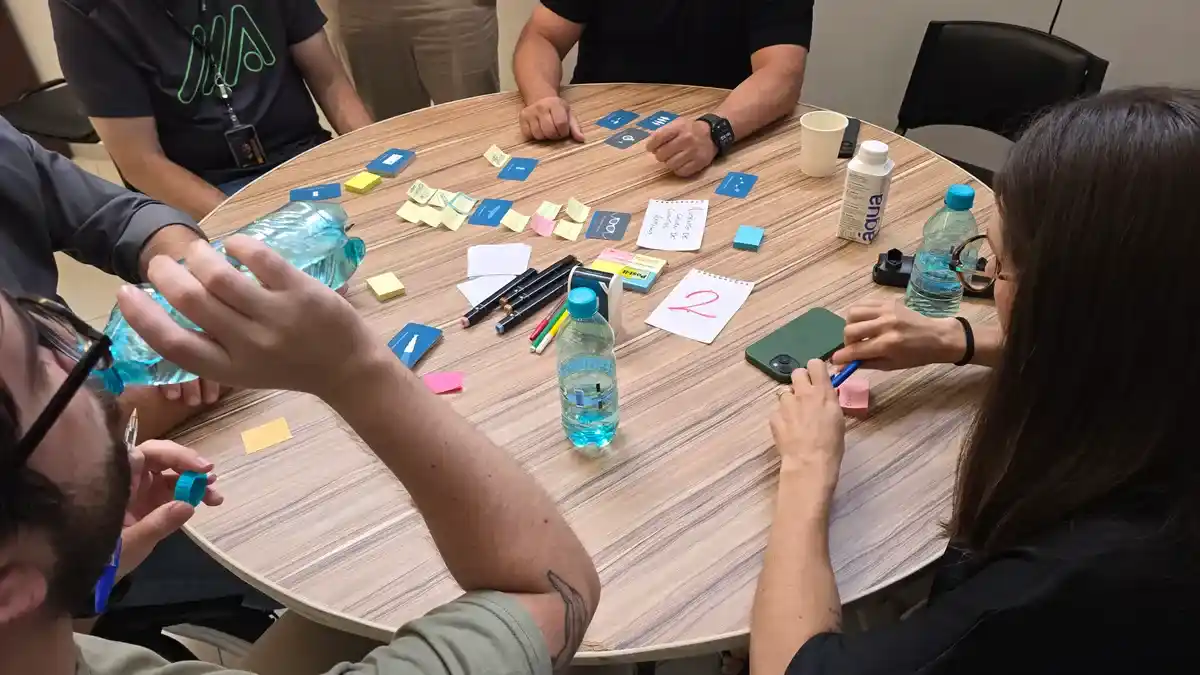
A useful ideation session produces fewer bad ideas and more comparable ones, which is better than collecting a hundred random suggestions.
Start with a narrow problem statement. “Improve onboarding” is too loose. “Reduce first-week drop-off in a 3-step signup flow for new users on mobile” is better because it gives the group a target. Then set a constraint. Time limit, budget cap, audience, format, or channel all help shape the ideas. Constraints are not enemies of creativity; they are the reason creativity becomes useful.
Because ideas fail when they are generated without guardrails, the session should separate generation from judgment. If people are asked to judge every idea as it appears, the room gets cautious. A simple pattern works better:
- Define the problem in one sentence.
- Name the target user or situation.
- Set 2 to 4 constraints.
- Generate ideas in silence first.
- Share and cluster the ideas.
- Score only the strongest candidates.
Silence first matters more than many teams admit. In live sessions, the loudest voice can anchor the room. Quiet written idea generation reduces that effect and makes it easier for more participants to contribute.
A common failure is asking for “creative” ideas with no boundary conditions. That produces slogans, moonshots, and ideas that sound clever but cannot survive contact with the calendar. If your team has only 10 working days, say so. If legal review takes 2 weeks, say so. If the audience is enterprise buyers and the tone must stay formal, say so. The more real the constraints, the more useful the ideas.
This approach is not for teams that want a theatrical brainstorm and nothing else. It is for teams that need usable options by the end of the meeting.
Planning and ideation together: the handoff that most teams miss
Planning and ideation work best when the handoff is explicit, not implied.
The handoff has three parts: a filter, a decision owner, and a next step. Without all three, the group leaves with “good ideas” and no change in behavior. The filter says what matters. The owner decides. The next step turns the decision into action.
A practical handoff looks like this:
- Filter: “Choose the option that can launch in 30 days, needs no new vendor, and can be measured in one metric.”
- Decision owner: one person who has authority to choose, not a committee that postpones the call.
- Next step: assign the first work block, the deadline, and the check-in date.
This is where generic advice often gets fuzzy. It talks about collaboration but ignores ownership. Collaboration is useful during ideation, when the point is to widen the field. It is less useful when the team must commit. If everyone can veto, nothing gets built. If nobody owns the choice, the plan becomes a list of hopes.
The stronger process is a two-stage one. First, generate alternatives. Second, reduce them using pre-agreed criteria. In product work, those criteria may be reach, feasibility, and effort. In marketing, they may be clarity of message, production load, and expected impact. In operations, they may be risk, cost, and compliance. The labels change, but the logic does not.
A good handoff also preserves the losing ideas. Do not delete them. Keep a parking lot or decision log. A rejected idea is often useful later when constraints change. This is one of the most overlooked parts of planning and ideation: the goal is not to be “right” forever. The goal is to make the next decision better than the last one.
The tools and methods that actually help
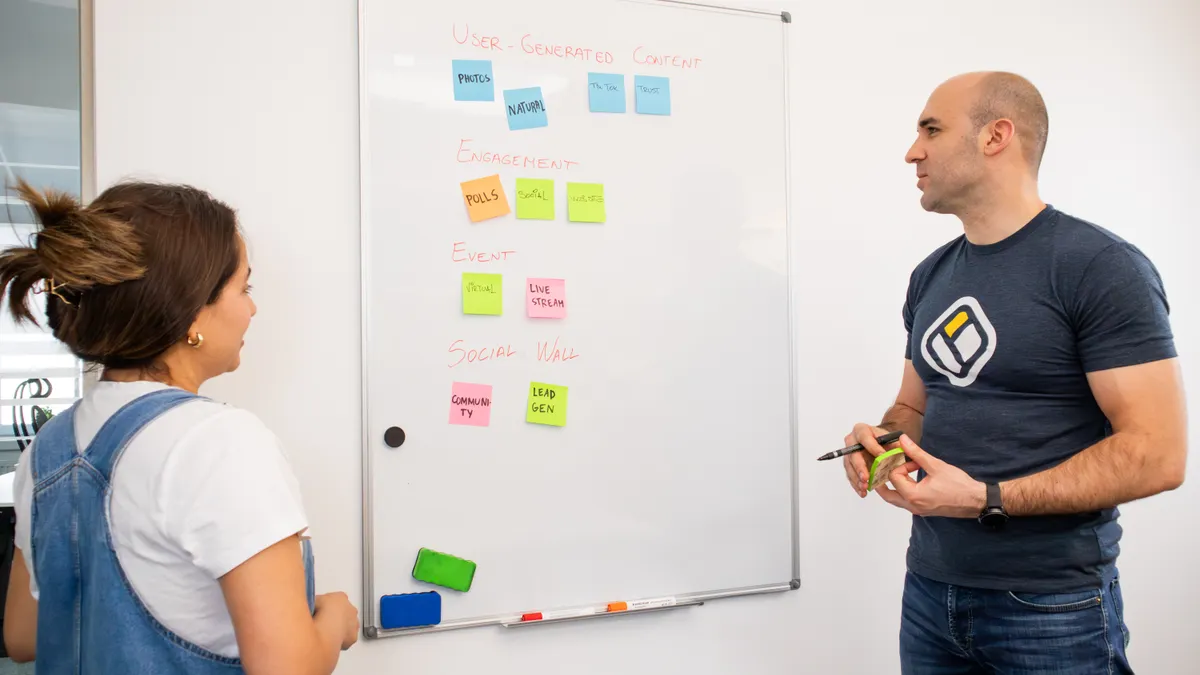
The most useful tools are the ones that force clarity, not the ones that make the meeting feel busy.
For ideation, structured prompts beat blank-page creativity. “How might we reduce friction at step three?” is more productive than “Any ideas?” The latter invites anything; the former guides attention. Mind maps can help when the topic is broad, but they are easy to drift into. Affinity mapping is stronger when the group has already produced a pile of ideas and needs to sort them. SCAMPER, reverse thinking, and forced combinations are useful when the team is stuck and needs a fresh angle.
For planning, a simple project outline does more than a beautiful slide deck. At minimum, the plan should name the goal, scope, deliverables, owner, dependencies, deadline, and review point. If a plan lacks any of those, it is not yet a plan; it is a wish.
One useful tool for both phases is a decision matrix. It gives the team a visible way to compare options using the same standards. A lightweight version can score each idea from 1 to 5 against criteria such as feasibility, impact, cost, and speed. The point is not mathematical precision. The point is to expose trade-offs and reduce hidden bias.
The trap is tool overload. A workshop does not need six frameworks. It needs one clear prompt, one clear filter, and one clear decision path. Too many templates make the group feel busy while the real question stays unresolved.
For teams that already have enough creativity and not enough follow-through, the right answer is usually a simpler toolset, not a bigger one.
What a strong planning process looks like after the ideas are chosen
A strong planning process turns selected ideas into visible commitments.
The first step is scope control. Define what is in and what is out. A plan without boundaries expands until it is too big to finish. The second step is sequencing. Break the work into stages that can be completed and reviewed. The third step is risk review. Ask what could block delivery, what needs approval, and which dependencies could slip. The fourth step is ownership. Every task needs a name next to it, not a group.
This is also where a lot of teams make the wrong trade-off. They try to preserve every promising idea by keeping it in the plan. That usually weakens the whole project. A plan works because it excludes most of the field. If a chosen idea needs a special budget, a new hire, and a six-month runway, it may still be worth keeping, but not in the current plan.
A practical planning sequence is:
- State the objective in one sentence.
- Pick one primary success measure.
- List the constraints.
- Break the work into 3 to 5 milestones.
- Assign one owner per milestone.
- Identify the top 3 risks.
- Set the first review date.
Notice what is missing: fluff. A planning document is not a place for inspirational language. It is a control document. If someone else cannot pick it up and understand what happens next, the plan is too vague.
This approach is not for projects that need open-ended discovery for months. It is for work that must move from idea to execution without losing shape.
Common mistakes that make planning and ideation fail
The biggest mistake is mixing idea generation with decision pressure too early.
When people know they will be judged immediately, they stop offering unusual options. The session becomes safe, and safe sessions produce familiar answers. That sounds efficient, but it usually gives the team a narrower field than it realized. A second mistake is running ideation without a real problem statement. If the prompt is fuzzy, the output will be fuzzy.
A third failure is planning before the idea is mature. Teams sometimes lock in a timeline, budget, and owner before they know which direction they want. That creates a plan that looks organized and behaves badly. It forces the project to fit the plan instead of the plan fitting the work.
A fourth mistake is overvaluing consensus. Consensus feels clean, but it often hides weak conviction. If everyone agrees too quickly, it may mean nobody challenged the idea. Better to surface disagreement early, while changes are still cheap. A healthy process makes conflict visible, then resolves it with criteria.
The last common failure is never reviewing the plan after launch. Planning and ideation are not one-time events. Good teams revisit assumptions when new information appears. If the first plan is treated as sacred, the project can freeze or drift; for high-stakes work, consult a qualified professional and use an appropriate source or internal governance process before treating any plan as fixed. A 15-minute review can save days of rework.
The wrong audience for this process is the team that wants inspiration without discipline or discipline without uncertainty. Planning and ideation only work together when both are taken seriously.
When should you use this process, and when should you not?
Use planning and ideation together when the problem is open enough to allow options but constrained enough to require a decision.
That means product launches, campaign planning, service redesign, content strategy, workshop output, and internal process improvements are strong fits. These situations benefit from divergent thinking first and structured commitment second. A two-hour workshop or a half-day working session can be enough if the problem is clearly framed and the decision criteria are known.
Do not use a full planning-and-ideation process when the answer is already known or when the task is purely operational. If the work is routine, a checklist beats a workshop. If the decision is already made by regulation, budget, or precedent, ideation can create noise rather than value. The same is true when the group lacks authority to act. A session that ends with “thanks, we’ll pass this up the chain” wastes time.
The best sign that this process is appropriate is uncertainty with boundaries. The team knows the goal, but not the route. It has enough time to compare options, but not enough time to improvise endlessly.
One useful rule: if a decision will cost more than a day of work, the process should include a serious ideation step. If it will cost less, keep it simple. That is not a universal law, but it is a practical one.
The verdict: the simplest way to get better results
Choose a two-stage process if you need better ideas and a way to choose among them. Choose a lightweight checklist if the work is routine, obvious, or already constrained by fixed rules. Neither if the team cannot name the problem, the decision maker, or the deadline.
That is the cleanest call. Planning and ideation belong together when you need creativity with direction. They do not belong together when the task is already settled or when the group cannot commit to a decision.
Key takeaways
- Ideation expands the field; planning closes it down into action.
- The best sessions begin with a narrow problem and real constraints.
- A decision filter matters more than a long list of ideas.
- Ownership and deadlines turn a promising concept into actual work.
- If the task is routine, skip the workshop and use a checklist.
What should a planning and ideation workshop produce?
A planning and ideation workshop should produce one chosen direction, a short list of rejected alternatives, and a next-step plan with owners. If it ends with a pile of sticky notes and no decision rule, it has not finished the job. A useful workshop usually leaves behind a documented choice, a deadline, and a visible risk list.
How many ideas should you generate before choosing one?
You should generate enough ideas to compare patterns, not so many that the group drowns in options. In practice, 10 to 20 decent ideas is often enough for a focused session, then the group can cluster and rank them. The right number depends on the scope of the problem and the time available.
What is the fastest way to improve planning and ideation?
The fastest improvement is to define the problem in one sentence and define the decision criteria before the session starts. That single change removes the most waste. It keeps ideation pointed and planning honest, which is why it matters more than any special template or facilitation trick.
Drafted with AI; not yet reviewed by a person.