Last updated: November 12, 2026
Quick answer: a fact-checking workflow for AI-assisted drafts works best when every non-obvious claim is traceable, checked in a fixed order, and handed off with visible status labels. AI can draft fast, but it can also invent quotes, blur dates, and mash sources together. Build a fact-checking workflow for AI-assisted drafts with source notes, original sources, an editorial checklist, draft annotations, and a clear handoff so every claim gets traced before review.
In short: the workflow below settles who checks what, in what order, and what happens when a claim fails. It also gives editors a shared method for reviewing AI-assisted drafts without guessing where the facts came from.
Build the fact-checking workflow around one job: trace every claim
The fact-checking workflow for AI-assisted drafts starts with one job: trace every claim.
For example, if you have a draft that sounds polished but half the sentences came from an AI tool and none of the sources are attached, you need a process that turns that draft into a checkable document before an editor ever reads it.
Start with a simple rule: every non-obvious claim in the draft must point to an original source, a source note, or a named gap. That rule is the workflow. If a sentence cannot be traced in under 2 minutes, it is not ready for editorial review.
Use a 3-part handoff:
- The writer marks claims, quotes, dates, and statistics in draft annotations.
- The fact-checker verifies each item against original sources.
- The editor reviews only after the checklist shows what passed, what changed, and what still needs work.
This structure does not require fancy software. A shared doc, comment field, and checklist can do the job if the rules are strict. The trap is letting AI output sit beside human research with no labels. That creates false confidence fast.
Keep one working standard: the final draft should never ask the editor to guess which line is sourced. It should already say it. That clarity saves time later.
The output should be checkable in 10 minutes or less. If it takes longer, the system is too loose.
What should go into source notes?
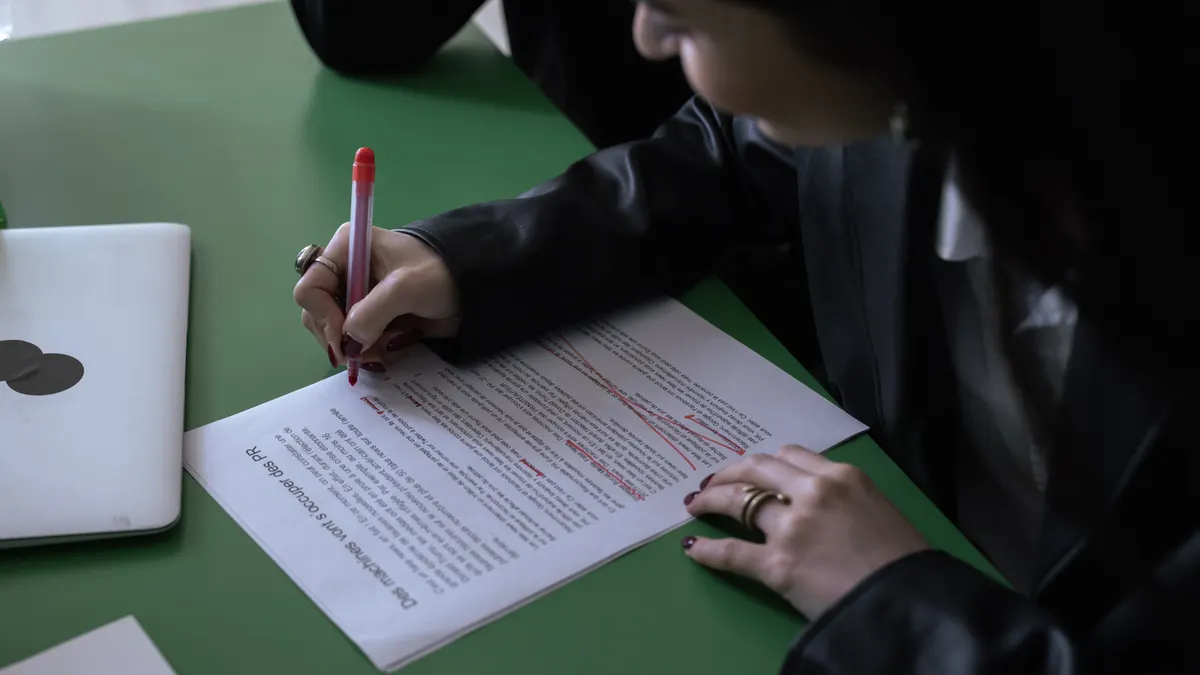
Source notes should capture the claim, the original source, and the exact evidence used.
For instance, if you’re reading a paragraph with three claims and each one has a different origin—one from an interview, one from a report, one from the AI model itself—thin notes force the fact-checker to reconstruct history instead of checking facts.
A good note is short but specific: what the claim says, where it came from, and whether it is direct, paraphrased, or AI-generated text that still needs proof.
Use a consistent format:
- Claim: the sentence or clause being checked
- Source type: interview, report, database, primary document, or web page
- Source detail: title, author, date, section, or timestamp
- Status: verified, changed, unsupported, or needs follow-up
That structure keeps the workflow from drifting into vague comments like “looks fine.” It also helps when a reviewer wants to see how a number or quote entered the draft.
A source note should answer one question: can I find this again in 30 seconds? If not, the note needs work. Source notes are not storage; they are instructions for traceability.
How do you verify claims in a draft?
The fact-checking workflow for AI-assisted drafts verifies claims in a fixed order.
For example, if you’re staring at a 1,200-word draft with a mix of statistics, product names, and a few quoted lines, the job is not to fact-check the whole piece at random. The job is to verify claims so nothing slips through.
Use this 5-step sequence. Each step does one thing, and each one should be visible in the draft annotations.
- Mark every claim, quote, date, statistic, and named entity in the draft.
- Trace each marked item to an original source before you compare wording.
- Check the source for exact numbers, names, dates, and attribution.
- Rewrite any sentence that overstates, compresses, or changes the source’s meaning.
- Record the final status in the editorial checklist so the editor can see what passed.
Because the order is fixed, you do not end up polishing a sentence that may need to be removed. If you trace first, you can see whether the issue is a bad source, a weak paraphrase, or an unsupported claim.
A useful rule is simple: the fact-checker should never fix facts silently. If a claim changes, the draft should show it. That protects the writer and keeps the editor from assuming the AI wording was correct.
Use the source, not the memory. AI can make a draft sound certain while hiding weak evidence. That is the whole risk.
Which claims deserve the hardest check in AI-assisted drafts?

The hardest checks in AI-assisted drafts belong on the parts most likely to break trust.
Specific claims such as quotes, numbers, dates, rankings, legal or policy claims, and any statement that sounds precise but came from AI output deserve the most attention.
Not every sentence needs the same depth. A claim about a process may only need a named source and a quick read-through. A statistic needs the exact figure, the date, the unit, and the context. A quote needs exact wording and attribution, not a close paraphrase that got dressed up as a quote.
Use this priority order:
- Exact quotes and paraphrases in quotation marks
- Dates, times, and version numbers
- Statistics, percentages, and counts
- Claims about features, policies, or product behavior
- Comparisons and superlatives that imply a ranking
For instance, if a sentence would be embarrassing to get wrong in front of a subject expert, it gets first pass review. That often means a source trace plus a human read of the original.
The weak spot in AI-assisted drafts is certainty language. Words like “always,” “never,” and “best” deserve extra scrutiny because they often creep in without evidence. That is where false authority starts.
Where the editor fits in the handoff
The editor fits in after the fact-checker has marked what changed and what still needs work.
If the handoff is vague, the editor repeats work or misses a failed claim hidden in clean copy. The editor’s job is not to re-check every source; it is to confirm that the workflow was followed, that the high-risk claims were resolved, and that the draft annotations match the final wording. That makes the editorial review about judgment, not detective work.
Use a 3-column handoff note:
- What was checked
- What changed
- What still needs proof or approval
That note can sit at the top of the draft or in the editorial checklist. Keep it brief. A long memo gets ignored. A tight note gets used.
This is also where responsibility gets clear. The writer owns the draft language. The fact-checker owns verification. The editor owns release. When those roles blur, nobody knows who to ask when a claim breaks.
No clear handoff, no clean review. That is the cost of mixing jobs inside one document.
What mistakes break the workflow?
The workflow breaks when the draft stops being a single source of truth.
If you’re trying to run checks but the draft keeps moving in private comments, email threads, and a new AI rewrite that nobody labeled, the process falls apart.
Three mistakes cause most of the damage:
- Hidden rewrites: AI or the writer changes a checked sentence after verification.
- Missing originals: the note points to a summary, not the source document itself.
- No status labels: nobody can tell if a claim is verified, corrected, or still open.
The cost is not just extra time. It is editorial confusion, duplicated work, and claims that survive because each person assumes someone else handled them.
The fix is plain:
- Freeze the checked draft version before review.
- Link or name the original source, not just a secondary summary.
- Tag each claim with a visible status in the draft annotations.
A good workflow also leaves room for uncertainty. If a claim cannot be verified in the allotted pass, mark it as open and send it back. Do not let “probably right” stand in for proof. That shortcut is how errors survive editing. Consult a qualified editor or subject-matter expert when a claim affects legal, medical, financial, or similarly sensitive content.
If the team handles long-form pieces, that approach belongs inside a larger AI workflow design for writers. This page covers the verification layer; it does not replace broader editorial quality control. Different problem, different tool.
How do you correct a failed claim without slowing the team?
A failed claim needs a short correction loop, not a debate in comments.
Use a 4-step correction loop:
- Flag the exact claim in the draft annotation.
- Replace or remove the claim in the working copy.
- Attach the original source or mark the claim unsupported.
- Recheck the changed sentence before release.
This loop keeps corrections visible and prevents quiet edits that create new errors. It also stops a common failure mode: changing one fact and accidentally breaking another nearby sentence.
The editorial checklist should note the reason for the correction. For example, a date may be wrong, a quote may be incomplete, or a statistic may lack context. That record helps the next draft avoid the same issue.
The honest trade-off is speed. A strict correction loop takes longer than a loose one. But the loose version only looks faster until the first correction lands in the wrong place. Then it gets expensive.
Key Takeaways
- Build the process around traceability, not around pretty copy.
- Treat source notes as proof maps, not as storage bins.
- Check quotes, dates, and numbers first because they fail most often.
- Make the handoff visible so writer, fact-checker, and editor do not overlap blindly.
- Use correction statuses in the draft itself, not in a separate message thread.
FAQ
how do you fact-check ai writing
You fact-check AI writing by tracing each claim to an original source and checking the exact wording against that source. Start with quotes, dates, names, and statistics, then move to weaker claims that sound certain but may not be supported. The draft should show what was verified and what still needs proof.
what should be checked before publishing an ai-assisted draft
Check anything that can mislead a reader if it is wrong: quotes, numbers, dates, names, product claims, and comparisons. You should also check whether any AI-generated sentence sounds authoritative without a source behind it. If a sentence cannot be traced to an original source, it should not move forward as-is.
how do you verify claims in a draft
You verify claims in a draft by marking each claim, finding the original source, comparing the source to the sentence, and recording the result in the editorial checklist. Keep the order fixed so the team does not skip straight to rewriting. The goal is to make every checked claim visible to the next person in line.
Drafted with AI; not yet reviewed by a person.