Last updated: November 05, 2026
Quick answer: use the first 8 results and the visible SERP features to identify the format the SERP rewards. In practice, content format analysis for How to Find Content Formats the SERP Rewards usually comes down to one dominant pattern on page one, not a guess from the topic alone.
If you want content format analysis that actually helps an article rank, start with the SERP and work backward. The point is to see whether Google is rewarding listicles, guides, comparison pages, video results, or how-to formats for that query before you decide what to publish.
Key takeaways
- The winning format is visible in the current results, not in a brainstorming doc.
- A query can reward more than one format, but one usually dominates the first page.
- Video results, list articles, guides, and comparison pages each signal different search expectations.
- The safest choice is usually the format that appears most often in the visible results and SERP features.
- If the results are split, the query may be ambiguous enough to need a narrower angle, not a forced format.
- A fast SERP scan is useful, but it is not the same as answering intent, which is a separate step.
Start with the live SERP, not the content idea
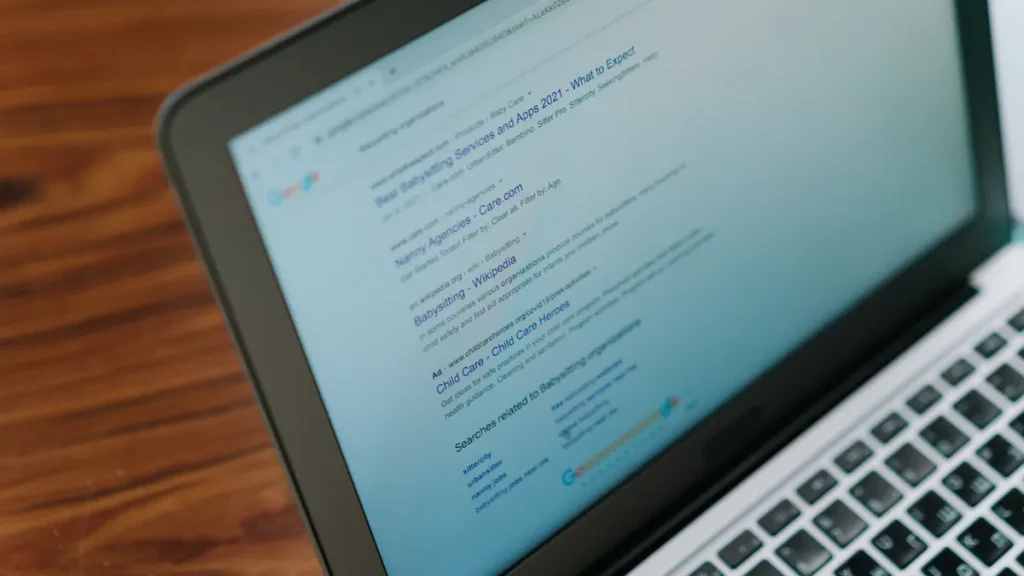
Content format analysis begins with a search results page, because the SERP shows what the engine is currently willing to surface for that query. Open an incognito browser window, search the exact phrase, and look at the first screen before you scroll past the fold. That first pass usually tells you whether the query is dominated by listicles, guides, comparison pages, or video results.
The question to answer here is simple: what format keeps repeating? If three of the first five organic results are list articles and two are guides, the query is probably tolerant of both, but the list article has the stronger signal. If a video carousel sits above the organic results, that is not decoration. It says the query may reward a visual explanation, a walkthrough, or a demonstration more than a text-heavy article.
Do not start by judging the topic you want to write. Start by counting visible patterns. A rough 5-result scan is enough to reveal the shape of the page. If the top row is a mix of product pages, Reddit threads, and one evergreen guide, the SERP is probably not asking for a generic article at all. That saves you from writing a polished piece in the wrong format.
This is also where the hub page on search-driven blog content fits, because format analysis is one decision inside a larger editorial process. The format choice belongs here; the angle choice belongs on a different page, and the broader workflow is covered in the search-driven blog content workflow.
How do I tell which format the SERP rewards?
The SERP rewards the format that repeats most often across the visible results and SERP features, especially on the first page. Use this 4-step method.
- Search the exact query in an incognito window and record the first 8 results, plus any video carousel, featured snippet, People Also Ask box, or image block. The result is a clean snapshot instead of a personalized one.
- Label each result by format: listicle, guide, comparison page, how-to, product page, forum thread, or video. After 8 results, you should see which format appears 3 or more times.
- Check whether the same format also appears in the SERP features, not just in blue links. If the featured snippet comes from a numbered article and the video block is visible above the fold, that is a stronger reward signal than a single matching result.
- Decide whether to match the dominant format or narrow the query. If the results are split almost evenly, the SERP is telling you the query is broad or ambiguous, and a tighter subtopic will usually work better than forcing one format.
What you should see when this works is a pattern you can defend. For example, if a query returns several “best X” pages, one comparison page, and a video block, the page is likely rewarding evaluative content, not a pure definition. If the results are mostly step-based articles, the query is probably rewarding how-to formats.
The detail that generic advice misses is that format and intent are not the same thing. A guide can answer a comparison query badly, and a listicle can answer a how-to query badly. The format must fit the shape the SERP is already showing.
Which signals matter most in content format analysis?
The most useful signals are repetition, position, and SERP features, not one flashy result. A single outlier can mislead you, but a repeated pattern across 8 to 10 results is hard to ignore. Look first at the top three organic results, then at the rest of page one, because the top slots usually carry the clearest reward signal.
Three signals deserve more weight than the others. First, title patterns. If multiple titles use numbers, years, or “best” language, the query may favor listicles or comparison pages. Second, page structure. A result with short sections, direct subheads, and action verbs usually suggests a guide or how-to. Third, media type. A visible video result can mean the engine thinks a demonstration is better than a text explanation.
A page can also show mixed signals. A query about software may return both comparison pages and tutorials. In that case, the question is not “Which format is right?” but “Which format is most rewarded for this sub-query?” For example, “X vs Y” usually points to a comparison page, while “how to use X” points to a guide. The two queries share a topic but not a format.
It helps to note the presence of specific SERP features. A featured snippet often compresses the answer into a short passage, but that does not mean the whole article should become a snippet-bait block. A People Also Ask panel can reveal adjacent questions, but it does not replace the core format signal. Treat those features as context, not as instructions by themselves; if the page affects a health, finance, or legal decision, consult a professional and verify the guidance with a source such as the Google Search Central documentation on structured data and search appearance: https://developers.google.com/search/docs.
The common mistake is over-reading one element. A video carousel does not automatically mean “make a video,” and a listicle at position 4 does not automatically mean “write a listicle.” The reward comes from the combination.
Why do listicles, guides, comparisons, and video results rank for different queries?
Listicles rank when the SERP wants selection, guides rank when it wants instruction, comparisons rank when it wants choice, and video results rank when it wants demonstration. That is the cleanest way to think about content format analysis because each format solves a different kind of search problem.
List articles work best when the user is scanning options, not learning a process. Queries with “best,” “top,” “ideas,” or “examples” often lean that way. The format gives the reader quick sorting and easy skimming. The downside is that listicles can feel shallow if the query actually needs depth. If the SERP is full of guides and the topic is operational, a list article is usually the wrong call.
Guides are the right fit when the searcher needs a sequence, a decision path, or a setup process. They often win on queries that imply “how,” “what to do,” or “step by step.” The trade-off is that a guide can get bloated if it tries to cover every adjacent question in one article. A strong guide stays on one job.
Comparison pages are useful when the searcher is choosing between two or more named things. “A vs B” queries are the clearest example, but comparisons also appear in broader “best” results when the real user need is evaluation. The risk here is drift: a weak comparison page turns into a product brochure. The SERP usually punishes that.
Video results show up when the engine thinks movement, timing, or visual proof matters. Assembly, software walkthroughs, physical techniques, and troubleshooting often pull in video because the user can see the process faster than reading it. That does not mean text is useless. It means the article has to meet the same visual clarity in another form.
The honest limitation is that no single format owns every query forever. Search results shift with language, device type, and the mix of existing pages. Content format analysis is a snapshot, not a law. Google’s Search Central guidance on ranking systems and results explains why that snapshot can change over time: https://developers.google.com/search/docs/fundamentals/understanding-search.
What should I do when the SERP is mixed or unclear?
When the SERP is mixed, narrow the query before you choose a format. If page one shows a split between listicles and guides, the query may be too broad for one article to satisfy cleanly. In that case, the smarter move is to define the subtopic first, then pick the format that the refined query rewards.
A mixed SERP usually shows up in three ways. One, the top results are not the same format, but they all solve slightly different tasks. Two, the page contains both educational and commercial results, which means the query has blended intent. Three, the video block, forum threads, and organic results all point in different directions, which means the engine is still testing what the searcher really wants.
The fix is not guesswork. Change one variable at a time. Try a tighter modifier, such as a use case, audience, model, or comparison pair. If the refreshed SERP becomes more uniform, you now have a clearer format signal. If it stays mixed after two or three query refinements, the query may be inherently broad, and the safer play is a format that handles ambiguity well, usually a guide with clear sections.
A useful rule: if the SERP is split between listicles and guides, look for the dominant question underneath the query. If people seem to be asking for options, choose a listicle. If they seem to be asking for steps, choose a guide. If they are asking which thing to pick, choose a comparison page. That distinction is usually more useful than chasing a single perfect result.
This is the point where a lot of generic advice fails. It tells you to “match search intent,” but it does not tell you what to do when the SERP is sending mixed signals. Narrowing the query is the practical answer.
How do I turn a SERP scan into a format decision I can publish?
Turn the scan into a format decision by writing down the dominant format, the backup format, and the reason the SERP seems to prefer them. A simple note with those three items is enough to make the choice usable in an editorial brief.
Use this checklist before you write:
- Count the first 8 organic results.
- Mark every listicle, guide, comparison page, and video result.
- Note any SERP features above the fold.
- Decide which format appears at least 3 times.
- Check whether the query is broad enough to support more than one format.
- If the page is mixed, narrow the topic before you commit.
The result you want is not a perfect prediction. It is a defensible format choice. If the SERP is mostly listicles, you write a listicle. If the SERP is mostly guides and video results, you write a guide with strong visual support or a video-first companion. If the SERP leans toward comparisons, you build a side-by-side page that helps the reader choose.
One honest drawback: this method can make you too responsive to the current page layout if you use it blindly. Search results are not static, and a weak competitor can distort the pattern. That is why the first page matters more than one result, and why you should ask what the format is doing for the searcher. The format is a means, not the goal.
If this page helps at the planning stage, the next useful step is to understand the larger search-driven blog content workflow, because format selection only becomes valuable when it fits the rest of the content plan.
FAQ
how do i know which format to use?
Use the format that repeats most often across the first page of results. The first 8 results, plus any video or snippet features, usually give enough evidence to pick a dominant pattern. If the SERP is split, narrow the query before deciding, because a broad topic can hide the real format signal.
why does google show different formats for the same query?
Google shows different formats because the same query can satisfy more than one search need. A broad phrase may pull in listicles, guides, comparison pages, or video results depending on device, phrasing, and the current set of pages competing for that term. Mixed results usually mean the query is still ambiguous.
should i match the top result format?
Usually yes, but only if the top result fits a pattern across the page. One result can be an exception; three or more matching results are a signal. If the top result is an outlier, do not copy it blindly. Match the dominant pattern, or narrow the query if the SERP is too split to trust.
Drafted with AI; not yet reviewed by a person.